

 25th February, 2026
 Competitive Exams
 Bhagya Achievers
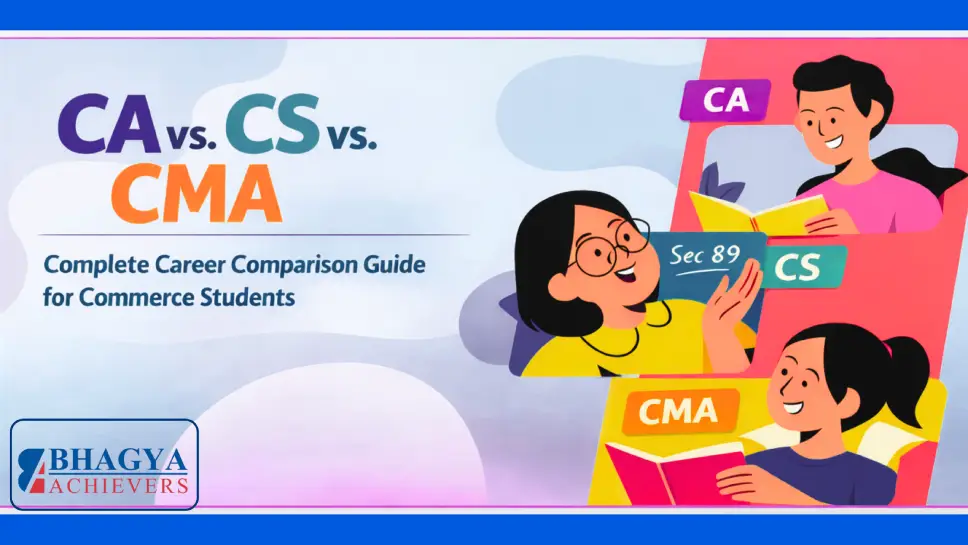
CA vs. CS vs. CMA – Complete Career Comparison Guide for Commerce Students
Table of Contents
Every year, thousands of commerce students lose precious years – not because they are weak in studies, but because they choose the wrong career path.
After class 12th or graduation, the biggest confusion is CA vs CS vs CMA. Friends say CA is best, relatives suggest CS, social media promotes CMA – and students get trapped in confusion.
One wrong decision can lead to multiple failed attempts, mental stress, self-doubts, and wasted years.
Check out the detailed comparison below before taking any decision so that you can move ahead with confidence.
Understand the Basics – What are CA, CS, & CMA?
Before we compare, let’s first understand what each professional course actually means.
Chartered Accountant (CA)
The primary objective of Chartered Accountant (CA) is:
- Auditing
- Financial Accounting
- Financial Management
- Corporate advisory
- Direct and Indirect Taxes
In simple words, a CA is a financial expert who not only manages accounting systems but helps in taxation planning, audits, and business financial strategy.
CA Professionals work in:
- Audit firms
- Tax consulting firms
- Corporate finance departments
- Banks and financial institutions
- Start-ups and multinational companies
Company Secretary
Company Secretaries are focused on:
- Corporate and business laws
- Company compliance
- Corporate Governance
- Secretarial Practice
- Regulatory framework
In simple words, a CS is a legal and compliance expert who ensures that companies follow legal rules, government regulations, and corporate governance standards.
CS Professionals work in:
- Corporate legal departments
- Secretarial firms
- Listed Companies
- Compliance advisory companies
- Regulatory organizations
Cost & Management Accountant (CMA)
Cost and Management Accountants focused on:
- Cost Accounting
- Management Accounting
- Financial Planning
- Performance evaluation
- Strategic Business decisions
In simple words, a CMA is a business planning and cost-control expert who helps organisations manage profitability, reduce wasteful spending, and improve operational efficiency.
CMA Professionals are highly demanded in:
- International corporations
- Strategic planning teams
- Departments of Corporate finance
- Business consulting firms
- Manufacturing companies
Course Structure & Duration Comparison
By understanding each course duration students can easily choose their future course.
|
Course |
Levels |
Practical Training |
Minimum Duration |
|
CA (Chartered Accountant) |
CA Foundation → CA Intermediate → CA Final |
Articleship Training (2 years practical exposure under a practicing CA firm) |
4.5 – 5 Years |
|
CS (Company Secretary) |
CSEET → CS Executive → CS Professional |
Practical Training ( 21 months with corporate / CS firm) |
3 – 4 Years |
|
CMA (Cost & Management Accountant) |
CMA Foundation → CMA Intermediate → CMA Final |
Practical Training (15 months in industry / finance / costing roles) |
3 – 4 Years |
Not sure which course suits you? Get expert guidance — Join Now
Difficulty level – which course is tougher, CA, CS, or CMA?
Each of the three courses is difficult. However, the difficulty level depends on syllabus depth, pass percentage and exam format.
|
Course |
Difficulty Level |
|
CA |
Very High |
|
CS |
High |
|
CMA |
Moderate to high |
- CA course includes a vast syllabus, difficult concepts, and practical training.
- CS is Law – intensive and need strong conceptual clarity and writing skills
- CMA is practical, calculation- oriented, and business- focused
Student selection Tip:
- Strong in Law and Theory – CS
- Strong in accounting and calculations – CA or CMA
Career Opportunities & Job Profile
One of the most important deciding factors for students is future scope and job roles.
Career Opportunities after CA
- A tax advisor
- An Auditor
- A practicing Chartered Accountant
- Corporate finance manager
- CFO (Chief Financial Officer)
- Investment Banker
- Financial Advisor for start-ups
CA Professionals are in high demand across all businesses because of their proficiency in finance and taxation.
Career opportunities After CS
- Company Secretary
- Compliance Officer
- Corporate Legal Advisor
- Governance Professional
- IPO and SEBI Consultant
- Corporate Law Consultant
In Corporate governance, legal compliance, and regulatory advisory roles, CS professionals are high in demand.
Career Opportunities after CMA
- Cost Accountant
- Financial Analyst
- Business Planning Manager
- Strategy consultant
- Management Accountant
- Corporate Finance Executive
In Business decision-making and performance improvement, CMA Professionals plays a crucial role.
Find your perfect career fit — Get expert guidance now
Salary Comparison – CA vs. CS vs. CMA
Salary depends on skills, experience, and organisation type. Check out the below table for salary details:
|
Course |
Fresher Salary |
5-10 year experience |
|
CA |
Rs. 8-15 LPA |
Rs. 25-50+ LPA |
|
CS |
Rs. 6-12 LPA |
Rs. 18-30 LPA |
|
CMA |
Rs. 6-10 LPA |
Rs. 18-35 LPA |
Key insight:
Professional growth depends more in skills, continuous learning, and work exposure than the course name. However, long-term income potential is excellent in all three fields.
Pass Percentage & Reality Check
|
Course |
Average Pass Percentage |
|
CA |
10-15% |
|
CS |
12-18% |
|
CMA |
15-20% |
The pass percentage clearly shows that success requires discipline, strategy, and consistent practice.
Professional Courses require:
- Effective methods for studying
- Regular revision
- Clarity of concepts
- Proper test practice
- Expert guidance
Career Scope in the Digital & AI Era
Due to rapid technological advancement, students often worry about job security. The truth is that professional careers are evolving rather than outdated.
Future Scope of CA
- Forensic Accounting
- Financial Data Analytics
- Virtual CFO Services
- Start-up advisory
- International Tax Consulting
Future Scope of CS
- IPO Advisory
- Start-up legal advisory
- Corporate Governance Consulting
- Regulatory advisory
- SEBI and MCA practice
Future Scope of CMA
- Business Analytics
- Strategic financial planning
- Corporate finance advisory
- Performance management
- Management Consulting
Routine tasks will be automated through technology, but professional, strategic decision making, and advisory roles will always remain in high demand.
CA, CS or CMA Aspirant? Boost Your Prep with Our Test Series
Common Myths about CA, CS, and CMA – And the Reality
Many students form opinions based on Social media trends, incomplete information, and peer influence. Let’s break the most common myths.
Myth 1: CA is the only best course
Reality: All the three courses offer strong career growth depending on your interest, abilities, and career goals. Choosing the correct course, not the popular one, is the key to success.
Myth 2: The Salary of CS is lower
Reality: with experience, CS professionals earn higher salaries, especially in listed companies, corporate legal departments.
Myth 3: CMA has limited scope
Reality: CMAs are widely recognized in Strategic roles, financial planning, performance analysis, and cost management, especially in manufacturing companies and Multinational corporations.
Which Course should you choose?
Your choice should depend on:
- Personal interest
- Career vision
- Academic strengths
- Patience level
- Long-term growth expectations
Choose CA if:
- You are strong in accounting and numbers
- You have interest in finance and taxation
- Your aim for high earning potential and independent practice
Choose CS if:
- You have interest in law and theory subjects
- You prefer corporate legal and compliance roles
- You want to work closely with company boards and management
Choose CMA if:
- You have interest in businesses analysis and strategic planning
- You like cost control and financial management
- You want corporate exposure in business leadership roles.
Need Career Guidance?
Still confused between CA vs. CS vs. CMA? One wrong career decision may affect your years of hard work, multiple failed attempts, and unnecessary stress.
Don’t let confusion decide your future. Start your professional journey with clarity, confidence, and expert guidance.
FAQs
Ques: Which course is better CS, CA, or CMA after 12th?
Ans: All the three courses CA, CS, and CMA are best. The best decision, however, depends on your interest, academic strengths, and long term career goals.
Ques: What is the difference between CA, CS, and CMA?
Ans: CA focuses on accounting, taxation, auditing, and finance, CS specializes in company law, corporate governance, and compliance, while CMA deals with cost accounting, financial planning, and business strategy.
Ques: Which course has the highest salary: CA, CS, and CMA?
Ans: On average, CA offers the highest salary potential, but experienced CS and CMA professionals can also earn competitive packages. However, salary depends on skills, experience, industry exposure, and specialization.
Ques: Which course has better scope in the future – CA, CS, or CMA?
Ans: All three courses have excellent future scope. With digital transformation and business expansion, demand for CA, CS, and CMA professionals is increasing in finance, compliance, strategy, and consulting roles.
Ques: Can I do CA, CS, and CMA together?
Ans: yes, students can pursue all three courses together but it requires excellent time management, discipline, and strategic planning to handle the workload effectively.
Also Check:
- How to Prepare Effectively for CA, CS, and CMA Exams – Proven Study Strategies
- Essential Skills Needed to Succeed as a CA, CS, or CMA Professional
- Salary Trends and Earning Potential of CA, CS, and CMA in India
- Global Career Scope for CA, CS, and CMA Professionals – Countries, Roles & Demand
- The Evolving Role of a Company Secretary in Modern Corporate Governance
- Top Career Opportunities after Becoming a Chartered Accountant in 2026 and Beyond
- Company Secretary Career in India: Salary, Career Growth & Leading Employers
- Top Reasons Why Students Choose a Career as a Company Secretary
- Career Opportunities after CMA India – Sectors, Roles & Salaries
- Why Bhagya Achievers is the Top Choice for CA, CS & CMA Aspirants
Recent Posts
-
CA Exam Preparation After Completing the Syllabus: ..
 6th October, 2026
-

CAI RTP, MTP and Previous Year Papers: How to Use T..
6th October, 2026
-

CA Inter Taxation: How to Prepare for Questions Inv..
6th October, 2026
-
CA Exam Answer Presentation: How to Structure Your ..
6th October, 2026
-

Test Series vs Self-Study: What Actually Improves Y..
1st October, 2026
-

CA Foundation to Final: A Test Series Roadmap for E..
30th September, 2026
-

How to Use Mock Test Results to Boost Your CA Score..
30th September, 2026
-

5 Reasons Toppers Swear by Test Series Before CA Ex..
26th September, 2026
-

Why CA Final Online Test Series Is a Game-Changer f..
25th September, 2026
-

CA Final Now Twice a Year (May & November): How..
22nd September, 2026
-

Why Your Bank Exam Score Isn’t Improving Despite ..
22nd September, 2026
-
Negative Marking in Bank Exams: How Test Series Pra..
20th September, 2026
-
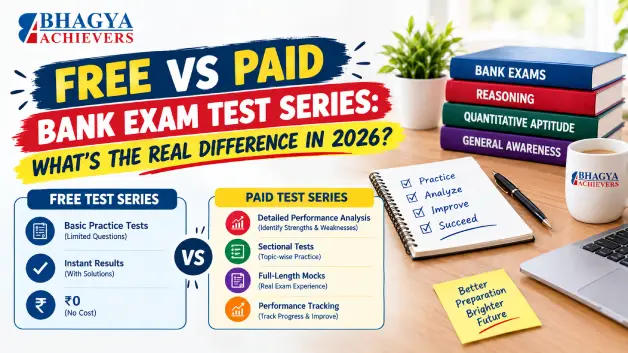
Free vs Paid Bank Exam Test Series: What’s the Re..
20th September, 2026
-

AI-Based Performance Analytics in Bank Exam Test Se..
16th September, 2026
-

Descriptive Paper & Interview Prep for Bank PO ..
16th September, 2026


